How Long Is Medical Assistant Training in Fort Worth? Timeline, Steps, and What to Expect
How long is medical assistant training? The answer depends on the type of program you choose — but for most students, it’s months, not years. That’s one of the biggest draws of the career: you can go from zero healthcare experience to job-ready in a fraction of the time it takes to complete a degree.
Here’s a step-by-step breakdown of the typical training timeline, what each phase involves, and how to move through it efficiently in Fort Worth.
The short answer
Most medical assistant programs can be completed in anywhere from a few months to about a year, depending on the format:
- Accelerated / certificate programs — often completable in a matter of months
- Diploma programs — typically 9–12 months
- Associate’s degree programs — 18–24 months (includes general education courses)
If your goal is to start working as soon as possible, a focused certificate or accelerated program is usually the fastest route.
Step 1: Choose a program (1–2 weeks)
Before training starts, you need to find the right program. Things to compare:
- Program length — how quickly can you complete it?
- Curriculum — does it include both clinical and administrative training?
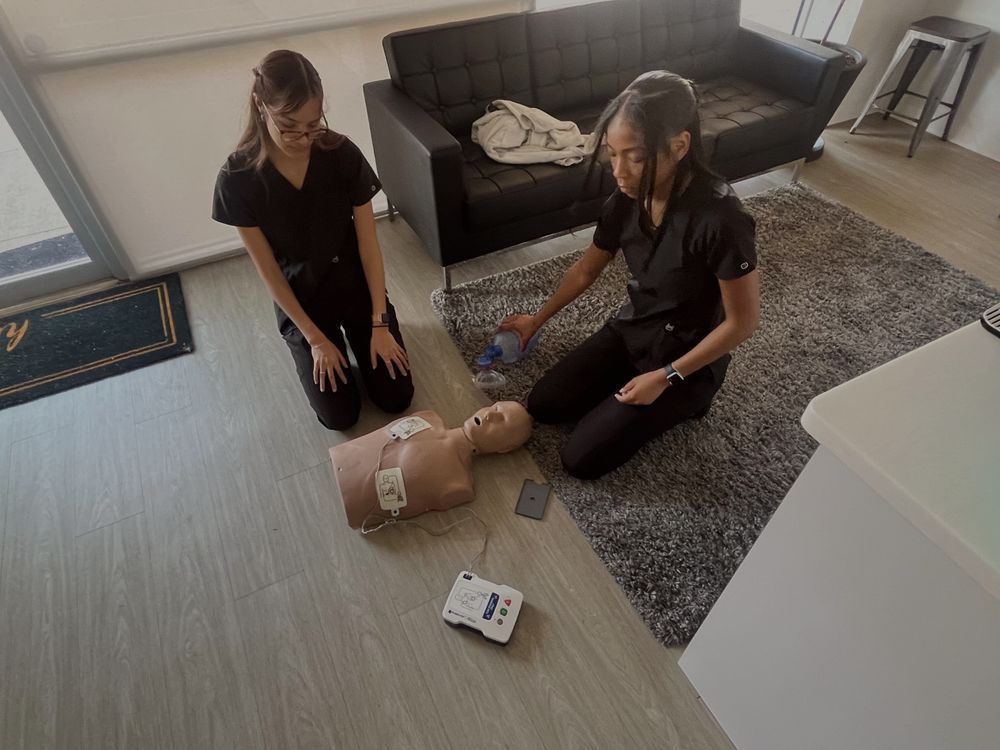
- Hands-on practice — is supervised clinical practice part of the program, or is it all online?
- Certification prep — does the program prepare you for the CCMA or another recognized exam?
- Cost — is tuition transparent? Are there flexible payment options?
Start by reviewing our program: Program details.
Step 2: Complete clinical and administrative training (the core timeline)
This is the bulk of your training. A well-structured program teaches:
Clinical skills:
- Vital signs (blood pressure, pulse, temperature, respiration, O2 saturation)
- Phlebotomy and specimen collection
- Injections and medication administration
- EKG/ECG procedures
- Infection control and sterilization
- Assisting during exams and minor procedures
Administrative skills:
- Patient intake and scheduling
- Insurance verification and billing basics
- Electronic health records (EHR) documentation
- HIPAA compliance
- Professional communication
The best programs integrate hands-on practice throughout — not just at the very end.
Step 3: Externship or clinical experience (varies)
Many programs include an externship component where you work in a real medical office under supervision. This gives you:
- Practice in a live clinical environment
- Experience with real patients and real workflows
- Something concrete for your resume
- Networking opportunities with potential employers in Fort Worth
Step 4: Certification (optional but recommended)
After completing training, many graduates sit for a certification exam — most commonly the CCMA (Certified Clinical Medical Assistant) through the National Healthcare Association. Certification isn’t legally required in most states, but it:
- Makes you more competitive when applying for jobs
- Demonstrates verified competency to employers
- Can lead to higher starting pay
Step 5: Job search and career start
With training and (ideally) certification complete, you can start applying for medical assistant jobs in clinics, physician offices, outpatient centers, and specialty practices in Fort Worth.
Students who graduate from structured, hands-on programs tend to find positions faster — because employers know they can perform from day one.
Your next step
- See our program structure: Program details
- Review tuition: Tuition
- Ask questions: Contact
- Apply: How to apply
You're only a few months from the medical assistant career you deserve.